
Under the title Catalysts of Resilience, it invites students to design spatial interventions that enable resistance and adaptation to predictable threats related to political shifts, social transformations, and climate change. The competition calls for design proposals that foster this capacity for resilience using time as a design tool.
The UIA International Student Competition is a prestigious global platform that challenges architecture students to tackle urgent architectural and urban issues through innovative design. Endorsed by the UIA, it fosters creativity, sustainability, and forward-thinking solutions. This single-stage ideas competition adheres to UNESCO’s Standard Regulations and UIA best practices, ensuring a fair and inspiring environment for aspiring architects. It provides a unique opportunity to showcase talent, engage with global challenges, and gain international recognition in the architectural field.
Prize Winners
First Prize
User Identification Number: 68f4852f838db
Team Leader: Harvey Rupp
Nationality: Australia
Team Members: –
Country Project Site: Australia
University: University of Western Australia (Australia)
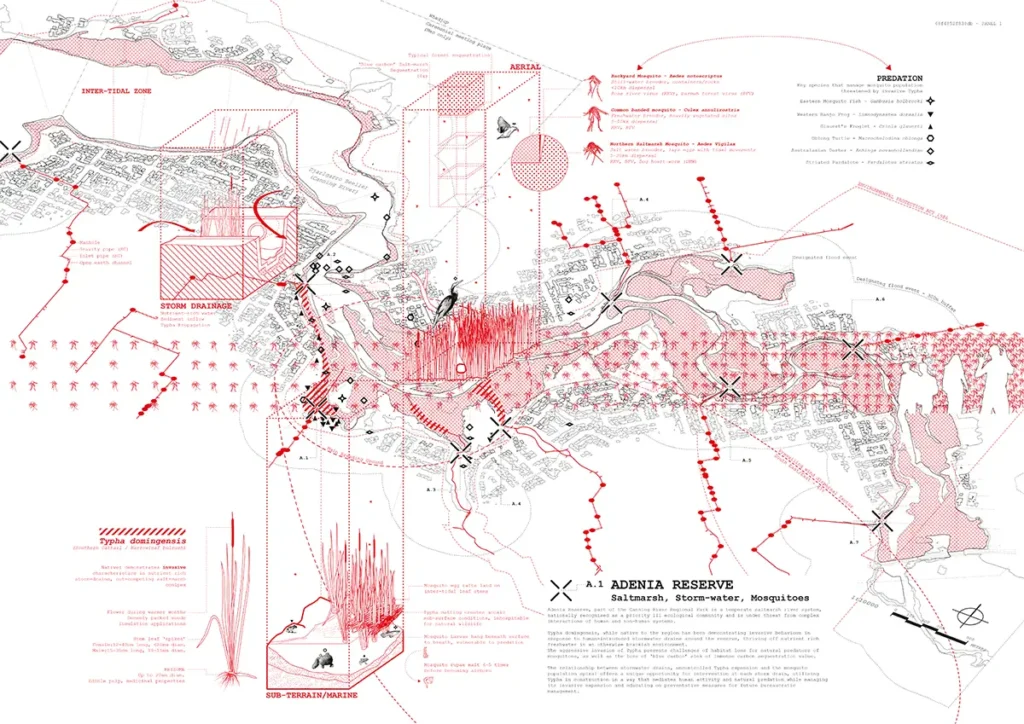
The proposal demonstrates a highly coherent and mature response to the competition framework, grounded in a precise understanding of site conditions, vulnerabilities, and ecological dynamics. The selection of both site and topic is thoughtful and well justified, revealing a nuanced reading of the saltmarsh as a fragile and evolving system shaped by hydrological disturbance and human intervention.
Rather than asserting architectural dominance, the project adopts a restrained spatial approach that foregrounds the landscape and positions non-human entities—water, climate, materials, and ecological processes—as active agents in the design. This “more-than-human” stance is articulated across multiple scales, from infrastructural diagnosis to territorial and seasonal transformation, allowing architecture to operate as a mediator rather than a fixed object.
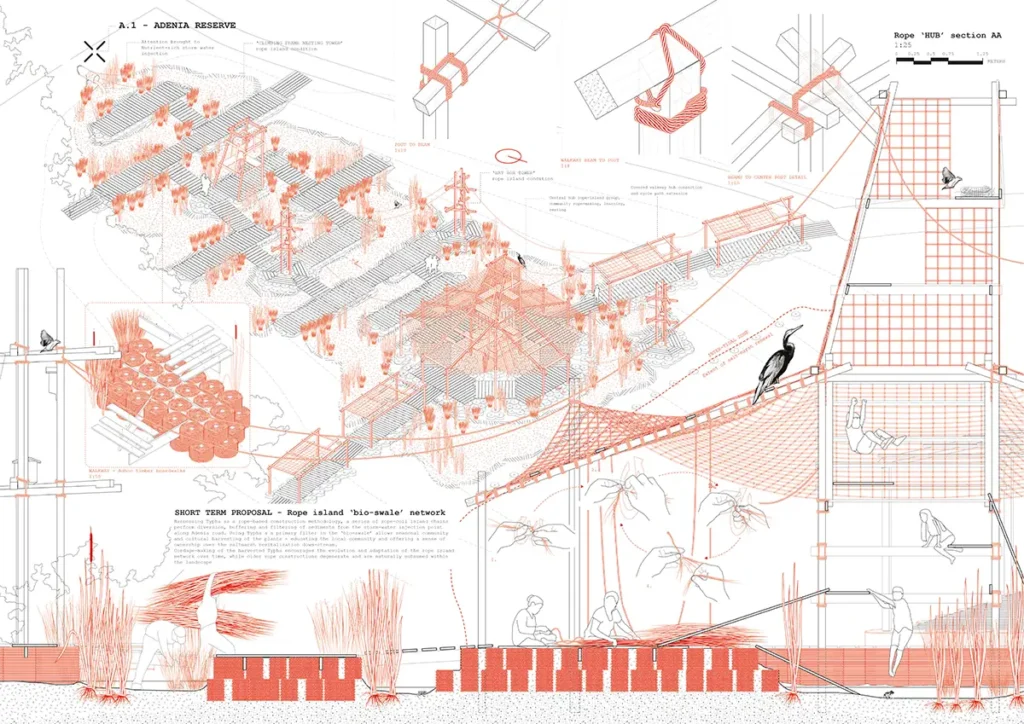
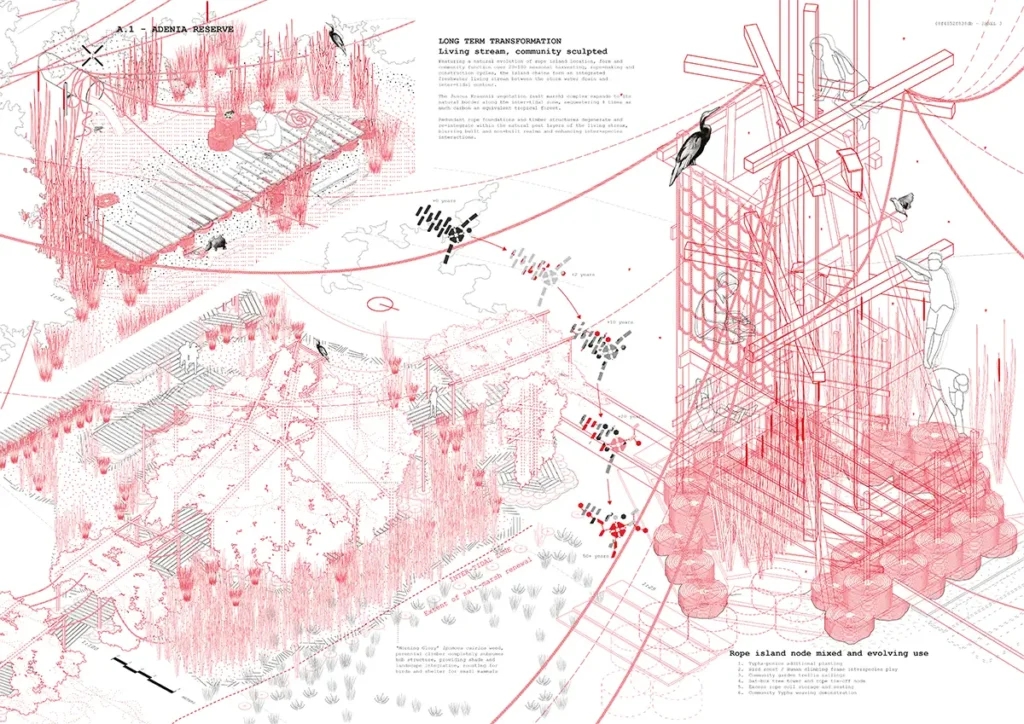
Leer másTime is explicitly mobilized as a design tool through a phased strategy that progresses from short-term, tactical interventions to long-term cyclical and seasonal processes. This temporal logic aligns convincingly with the Catalysts of Resilience framework, framing time as an active agent for ecological repair, adaptation, and stewardship rather than a neutral backdrop.
The project’s innovation lies in its use of low-tech, reversible, and hand-buildable interventions that remain realistically manageable through accessible construction techniques. These adaptive elements enable the system to evolve over time, embracing uncertainty while avoiding rigid solutions.
Clear and well-structured narrative and visual communication make complex ecological processes legible without simplification. While deeply rooted in its specific context, the proposal offers a scalable and transferable model for similar environments, demonstrating strong potential for long-term ecological and socio-environmental impact.
Second Prize
User Identification Number: 6906a4017b9ad
Team Leader: Hikmet Eda Akbas
Nationality: Turkey
Team Members: Sevval Bayir
Country Project Site: Germany
University: RWTH Aachen University (Germany)
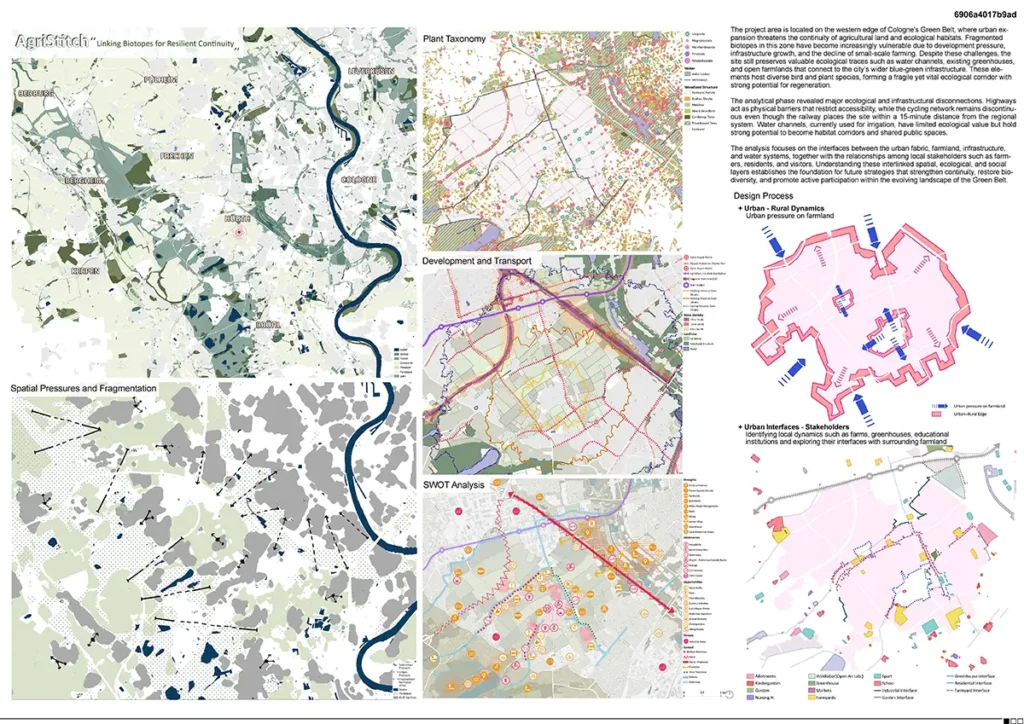
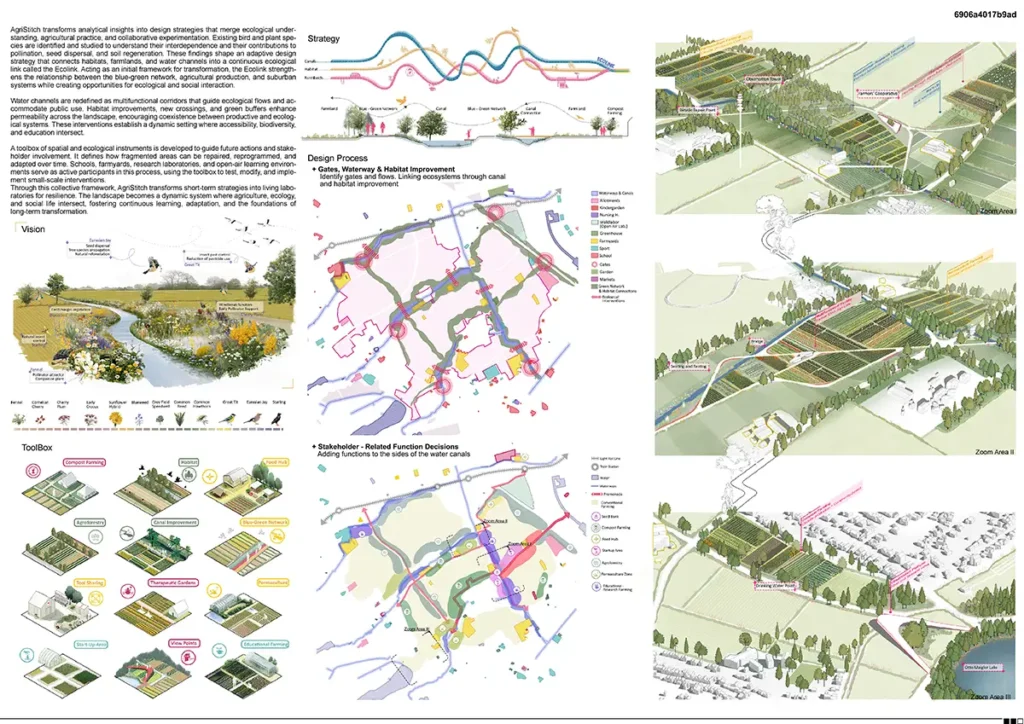
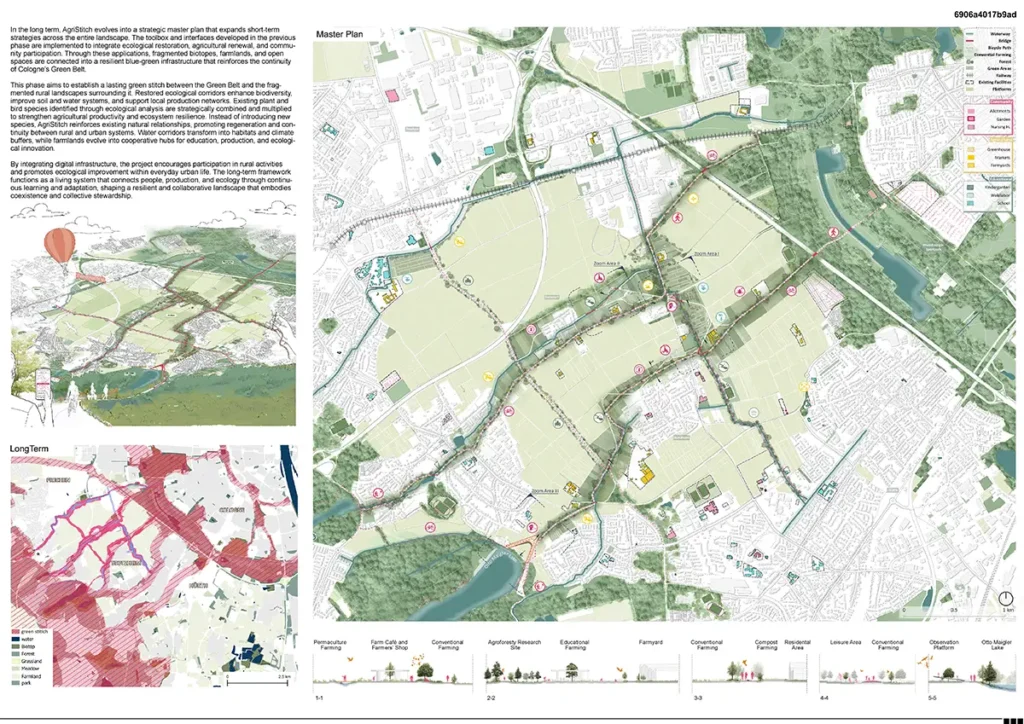
AgriStitch presents a compelling and timely response to the competition theme by addressing the urgent need to rethink large-scale productive landscapes within contemporary peri-urban conditions. The proposal demonstrates a strong macro-scale understanding of Cologne’s Green Belt edge as a contested threshold shaped by urban expansion, agricultural production, and ecological systems. Fragmentation is clearly identified as the site’s primary vulnerability, and the project responds through a precise mapping and reconnection of waterways, farmlands, and ecological corridors.
Time is positioned as a key connective design instrument, framing resilience not as a static outcome but as a gradual process of ecological, social, and productive integration. The phased strategy—linking immediate spatial stitching with long-term landscape transformation—aligns convincingly with the Catalysts of Resilience framework and reinforces the project’s thematic coherence across multiple temporal scales.
Leer másInnovation lies in the hybridization of blue-green infrastructure with agricultural productivity. By merging canals, wetlands, and farming corridors, the proposal establishes a flexible and adaptive framework capable of evolving in response to environmental and social pressures. Rather than separating conservation from human activity, the project promotes an adaptive coexistence that enhances biodiversity while sustaining local food systems and civic engagement.
The proposal is communicated with clarity and consistency through strong visual and narrative articulation, making its spatial logic and longterm ambitions easily legible. While deeply rooted in its specific context, AgriStitch offers a scalable and replicable model for other metropolitan edges, positioning productive landscapes as a catalyst for resilient urban growth and environmental regeneration.
Third Prize
User Identification Number: 690dc77814955
Team Leader: Manuel Alexander Fustamante Mori
Nationality: · Peru
Team Members: –
Country Project Site: Spain
University: · Universidad del País Vasco (Spain)
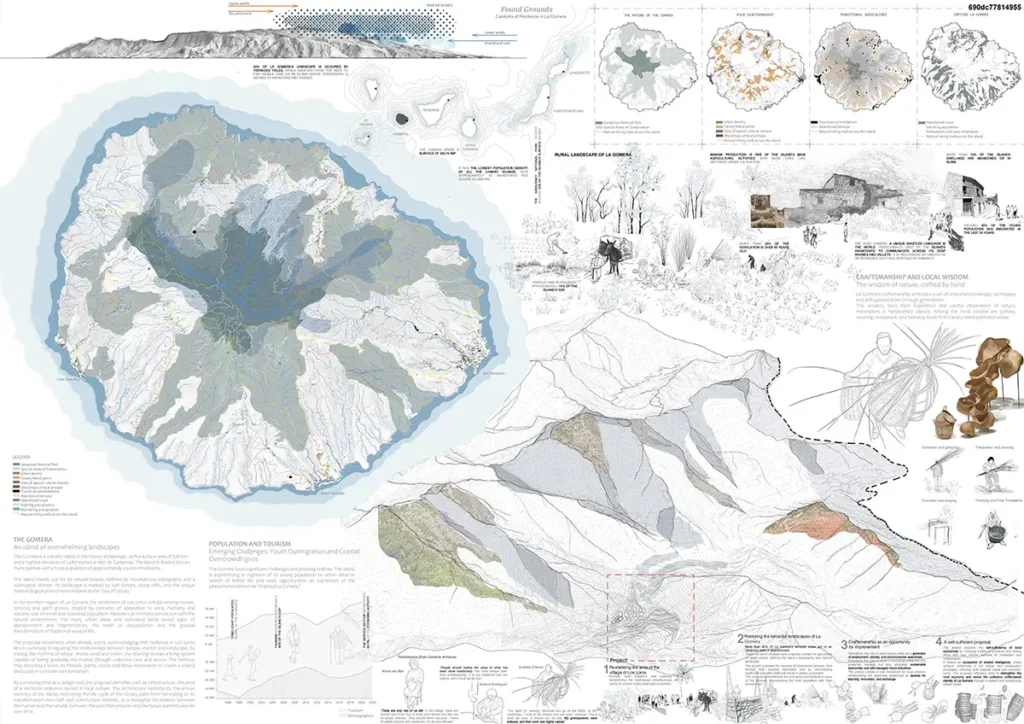
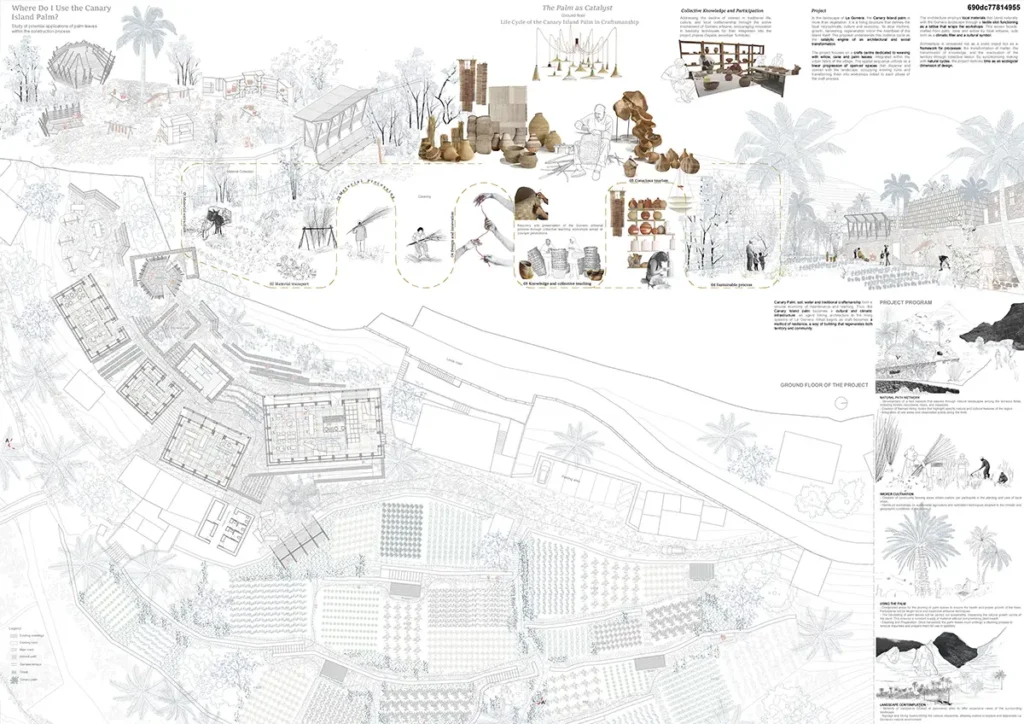
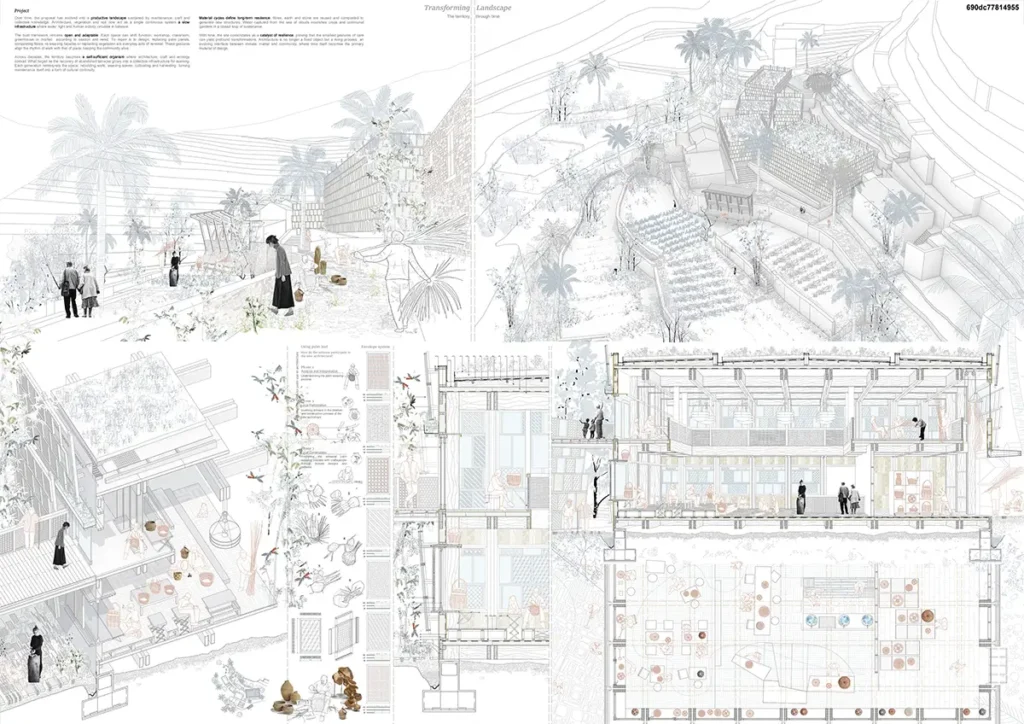
The proposal offers a sensitive and well-articulated response to the competition theme by addressing resilience through the intertwined dimensions of time, culture, and productive landscapes. Grounded in a deep understanding of La Gomera’s terraced territories, the project recognizes these landscapes as both ecological infrastructures and cultural artefacts shaped by climate, topography, and long-term human labor. Depopulation and landscape abandonment are clearly identified as critical vulnerabilities, framed not as isolated conditions but as processes unfolding over generations.
The strength of the project lies in its convergence of tradition and innovation within a unified agro-cultural framework. Traditional agricultural and craft techniques are mobilized not as static heritage, but as active instruments for territorial regeneration, social cohesion, and circular resource use. This approach positions sustainability and circularity as operative tools against the overexploitation of natural resources.
Leer másTime is explicitly employed as a design tool through a layered strategy that connects short-term reactivation with long-term consolidation. Initial interventions reintroduce palm-based agriculture and communal workshops as catalysts for engagement, while longer-term strategies establish productive terraces and craft-learning centers that stabilize both ecological systems and local livelihoods. This temporal structure aligns convincingly with the Catalysts of Resilience, allowing the landscape to evolve as a living and productive system rather than a curated relic.
The proposal is communicated with clarity and precision, demonstrating careful consideration across scales—from material practices to architectural organization and community involvement. By addressing not only architecture but also its operation and collective construction over time, the project offers a scalable and transferable model for rural and island territories facing similar challenges, contributing meaningfully to resilient agro-cultural futures.
Fourth Prize
User Identification Number: 690dd5c7aaeea
Team Leader: Sarah Levihn
Nationality: · Germany
Team Members: Cheng Yu Han and Levin Suresh Country
Project Site: India University: · Tsinghua University (China)
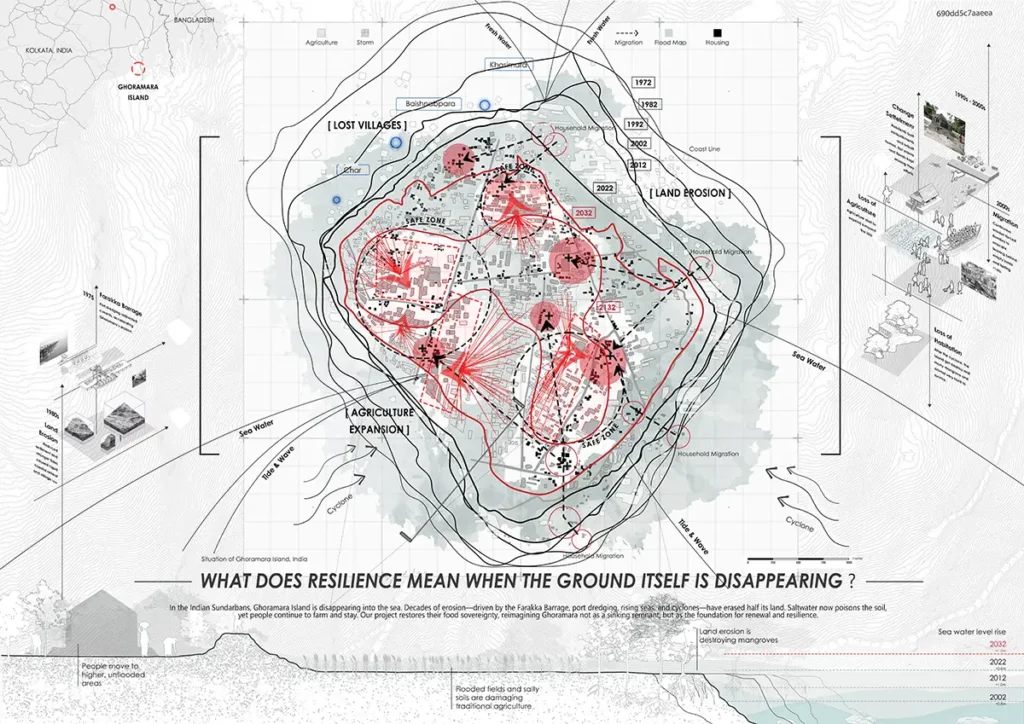
The proposal delivers a powerful and well-articulated response to conditions of extreme environmental vulnerability, demonstrating a strong understanding of Ghoramara Island as a fragile deltaic landscape shaped by erosion, salinity, and socio-economic precarity. Land loss and displacement are clearly identified as cumulative and accelerating processes that threaten both settlement stability and livelihoods, and the project addresses these challenges with clarity and precision.
Time is mobilized as a central design instrument, aligning convincingly with the Catalysts of Resilience by transforming emergency responses into long-term ecological and territorial adaptation. Rather than treating the project as a fixed intervention, its temporal logic allows the strategy to evolve in response to shifting environmental conditions, making resilience an active and ongoing process.
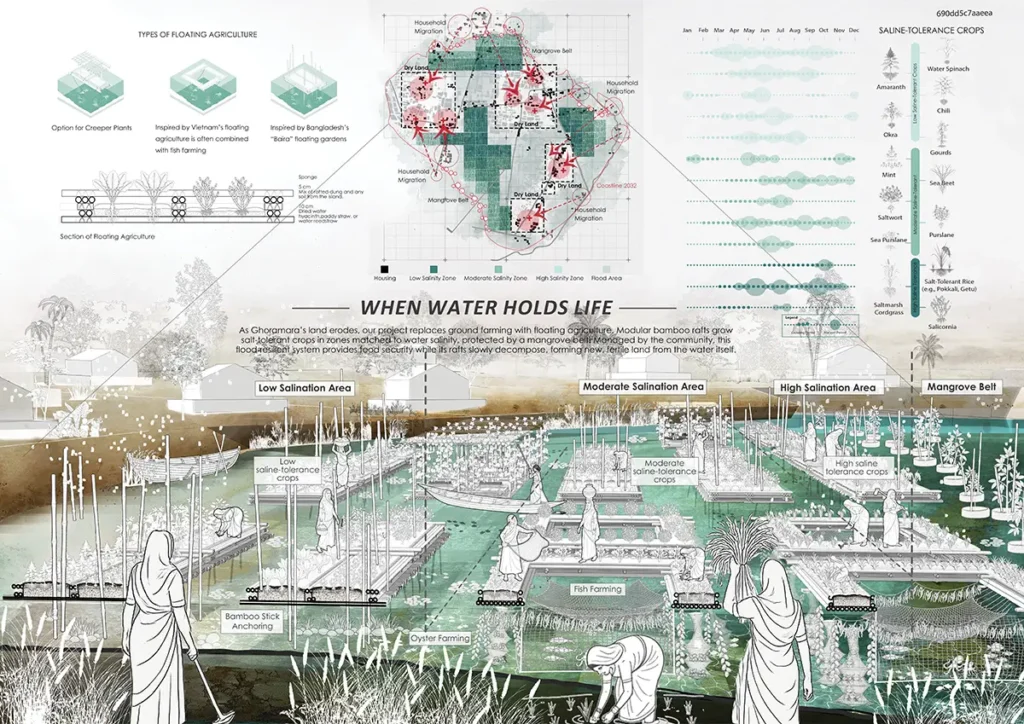
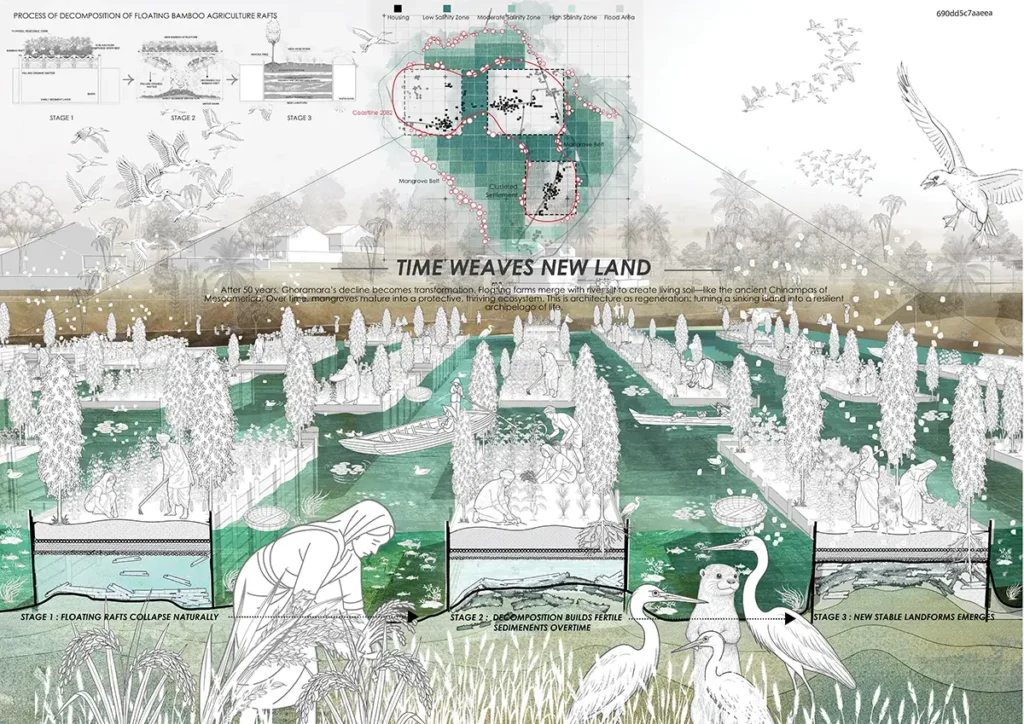
Leer másThe proposal’s innovation lies in its reimagining of productive activities through an adaptive model of floating bamboo agriculture. As a short-term response, this system sustains cultivation under changing water levels while minimizing negative territorial impacts. Over time, the decomposing rafts contribute to sediment accumulation and soil formation, while the expansion of mangroves reinforces coastal protection and supports fragile ecosystems of global ecological importance.
The project is communicated through clear and accessible visual and narrative tools that effectively convey both site vulnerabilities and design intent. The temporal progression—from floating infrastructures to the gradual formation of new fertile land and stabilized ecological systems—is legible and compelling.
While deeply rooted in the specific conditions of Ghoramara Island, the proposal demonstrates strong scalability and transferability. By coupling livelihood security with ecological restoration, it offers a robust framework for resilient settlement strategies in erosion-prone and flood-affected coastal territories facing climate uncertainty.
Fifth Prize
User Identification Number: 690e0a6f5721e
Team Leader: Armin Maierhofer
Nationality: Austria
Team Members: –
Country Project Site: ·Switzerland
University: Royal College of Arts – School of Architecture (United Kingdom)
The proposal presents a bold and conceptually clear response to landscape instability, addressing erosion, climate change, and ecological transformation through a time-based design logic. Grounded in a nuanced understanding of Mount Kaiseregg’s alpine meadow as a fragile system shaped by steep topography, grazing practices, and climatic pressures, the project accurately identifies erosion-prone slopes as its primary vulnerability.
Rather than treating instability as an isolated condition, the proposal frames it as an ongoing process, aligning convincingly with the Catalysts of Resilience by positioning time as a central operative tool. Human and non-human agents are both acknowledged, allowing ecological processes to guide spatial transformation toward long-term stability.
Leer másThe project’s innovation lies in its use of tripod-based timber structures as a temporary yet performative intervention. These simple and achievable elements provide immediate protection for vegetation and living beings while initiating assisted reforestation. As the structures gradually sink and decay, they become integrated into the landscape, enabling ecological succession and the emergence of a post-anthropocentric alpine ecology driven by natural processes rather than permanent construction.
The proposal is supported by strong visuals and a clear, accessible strategy that translates complex environmental challenges into realistic building methods. Its multi-temporal structure effectively connects short-term protective actions with long-term landscape transformation, articulating a coherent narrative of environmental recovery.
While deeply rooted in its alpine context, the project demonstrates strong scalability and transferability. By offering a replicable model for erosion-prone mountain ecosystems worldwide, it positions itself as a valuable contribution to resilient landscape restoration in the face of climate-driven change.
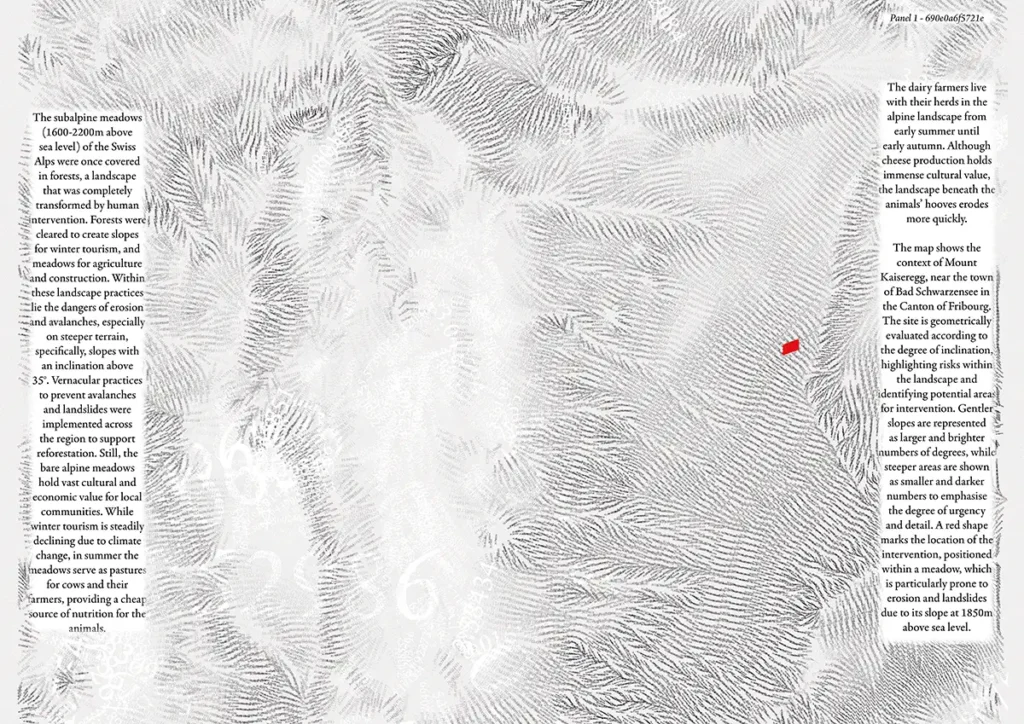
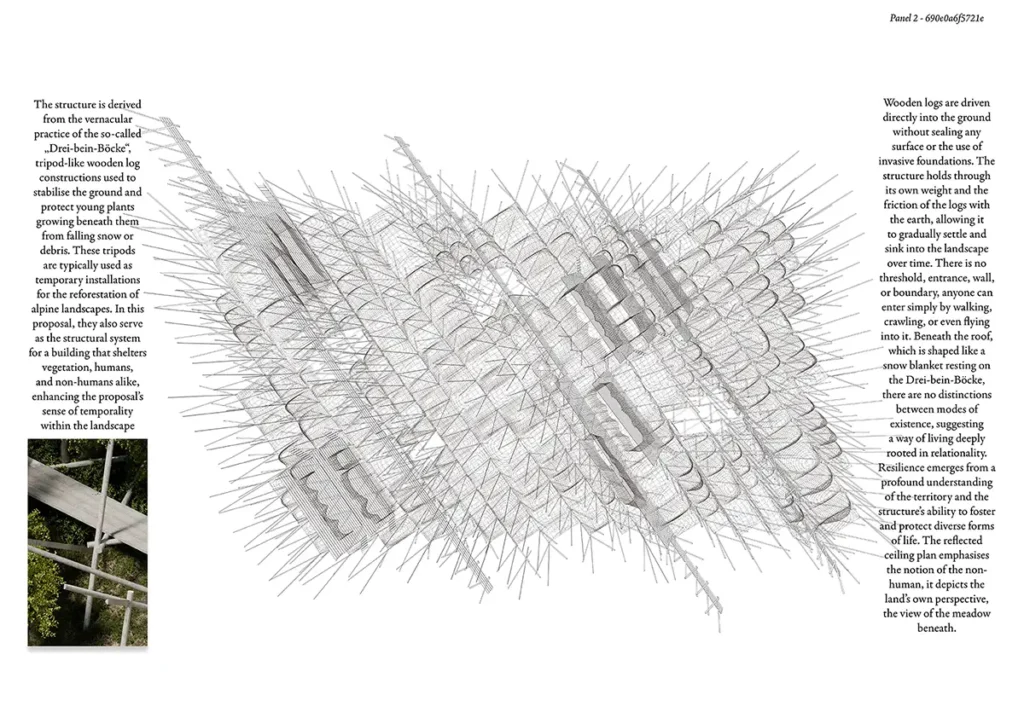
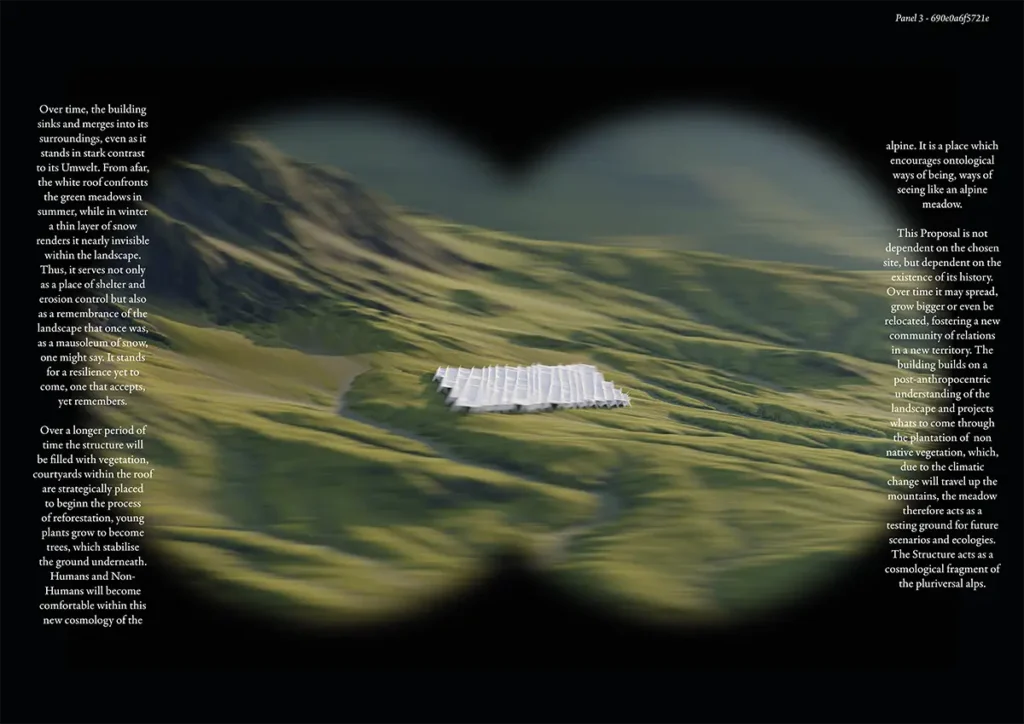
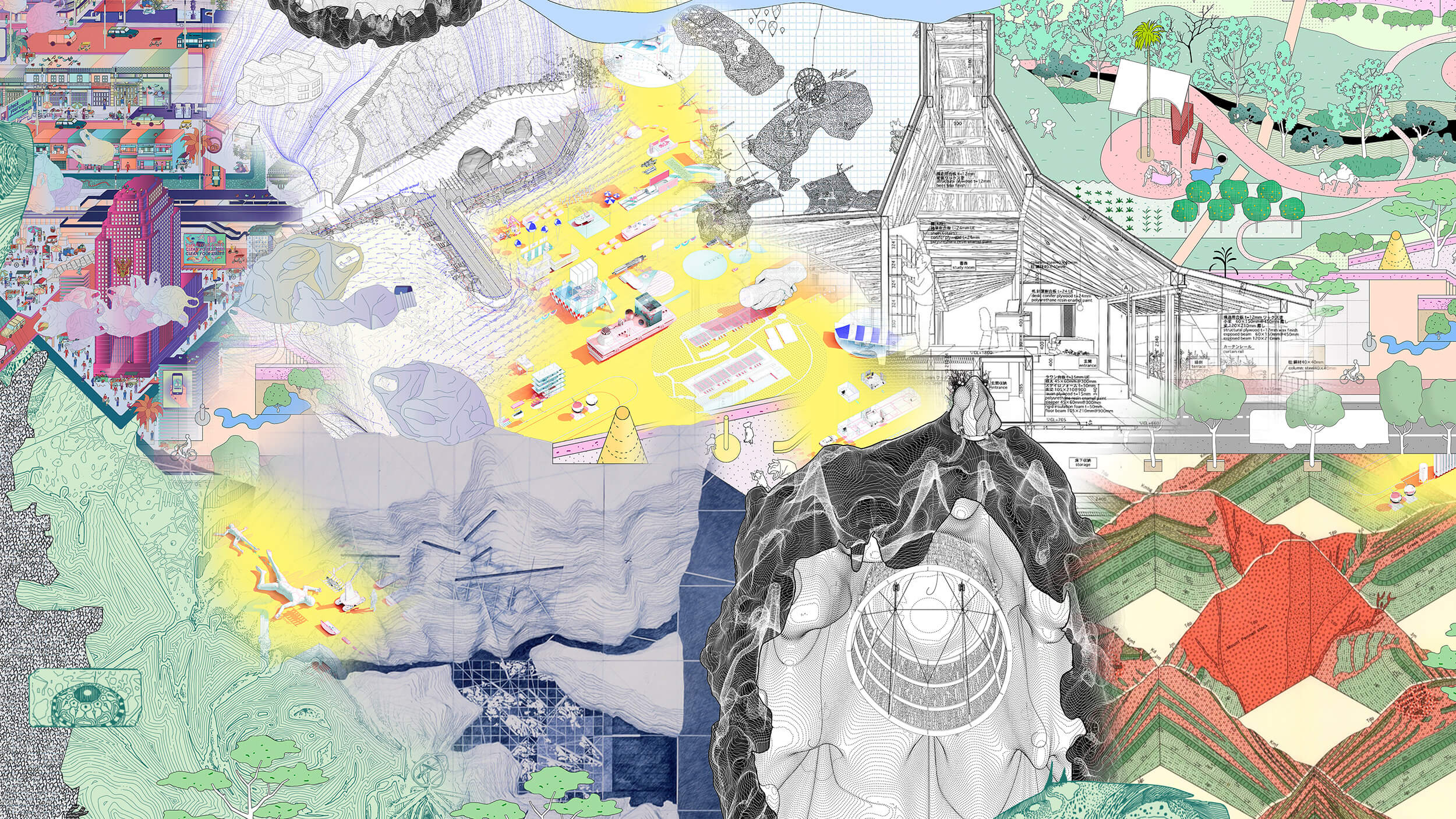
Fig. 4 Collage of digitally manipulated images by Judit Musachs and Pol Pérez selected by the curatorial team. Images captioned clockwise: Bangkok Oportunistic Ecologies, drawing by Animali Domestici; Reino Mineral, drawing by Lluis Alexandre Casanovas; Closer Each Day: The Architecture of Everyday Death for The Canadian Centre for Architecture, drawing by Comon Acounts; Athens By Hills, drawing by Point Supreme; Nora House, drawing by Atelier Bow-wow; P.A.R.C, drawing by Adrià Escolano & David Steegman; Isometric Fence Mount Fenell 1950; Phyla, drawing by TAKK; Jardins Elementaires, Villa Medici, drawing by Michel Desvigne; Cover from Athenian Primitivism, drawing by Al White.
Jury
Tatiana Bilbao
Tatiana Bilbao founded her studio in 2004 with an interdisciplinary approach that combines research, design and community participation. Her practice develops architecture as a platform for improving life in different geographies and typologies, based on fieldwork and research. She has taught at Yale, Harvard, Columbia and other international universities. Her work has been widely published and recognised for its social and cultural impact. In 2025 she was named Honorary Fellow of the American Institute of Architects (HFAIA) and her project Mar de Cortés Research Centre was a finalist for the Mies Crown Hall Americas Prize (MCHAP).
Josep Ferrando
Architect based in Barcelona and director of Josep Ferrando Architecture, he combines professional practice with teaching and cultural management. He is Dean of ETSALS (La Salle Barcelona) and was formerly Director of the Centre Obert d’Arquitectura at the COAC.
His work has been exhibited internationally, with notable solo shows at the 2014 Venice Biennale, the Aedes gallery in Berlin, and the Museum of Modern Art (MAM) in Rio de Janeiro. He took part in the “Unfinished” exhibition at the Spanish Pavilion of the 2016 Venice Biennale, which was awarded the Golden Lion. He has received awards such as the FAD, the Spanish Biennial of Architecture and Urbanism (BEAU), the BIABA’15, and has been nominated for both the European and American Mies van der Rohe Awards.
Since 1998, he has combined practice with teaching in universities across Europe and the Americas, and has lectured at institutions including Harvard GSD, MIT, Cornell, and Cooper Union, as well as at international conferences such as UIA’11 (Tokyo) and BIAU’19 (Asunción).
Marianna Rentzou
Marianna Rentzou founded Point Supreme with Konstantinos Pantazis in 2008 after living and working in Athens, London, and Rotterdam. They have won 1st prize in various international competitions. Their work has been published in three monographic books: ‘Athens Projects’ (2015), ‘Radical Realities’ (2017) and a dedicated issue of a+u magazine (2023). Marianna has taught internationally at architecture schools such as Columbia University in New York and EPFL in Lausanne. Point Supreme were included among the 20 most influential personalities in Greece by popular Greek newspaper LIFO, and they were named ‘‘best residential architecture studio in the world’’ for 2024 by international global affairs magazine ‘Monocle’.
Sumayya Vally
Sumayya Vally (b. 1990, South Africa) is the principal of architecture and research practice, Counterspace. Her practice is dedicated to articulating expressions of hybrid identities and spaces, with a particular interest in the complex relationships between territories and places. Vally is the youngest architect ever commissioned for the Serpentine Pavilion, completed in 2021 and lauded as one of the most radical pavilion designs to shape the commission. She was Artistic Director of the inaugural Islamic Arts Biennale in Jeddah, which marked a pivotal moment in reimagining the definition of Islamic art. A TIME100 Next list honoree, World Economic Forum Young Global Leader, and Dezeen’s Emerging Architect of the Year 2023, Vally has been identified as someone who will shape the future of architectural practice and pedagogy. She is Honorary Professor of Practice at The Bartlett School of Architecture, and an Honorary Fellow of the Royal Architectural Institute of Canada.
Wtanya Chanvitan
Wtanya Chanvitan is an architect and educator, and co-founder of Bangkok Tokyo Architecture (BTA), established with Takahiro Kume in 2017. The studio is fascinated by open-ended structures and the thoughtful assembly of everyday elements, blurring the lines between the ordinary and the exceptional. Their practice seeks to liberate architecture from the realm of experts, exploring potential models of sustainability. BTA was Highly Commended at the Architecture Review Emerging Awards 2023 and won the Rice University Spotlight Award in 2024.
Alternative Juror:
Donn Holohan
Originally trained as a cabinet maker, Donn Holohan is co-founder of the experimental practice Superposition, which explores building culture and the climates, tools, and materials that shape it. Through the integration of emerging technology with local and vernacular knowledge, his work focuses on design and build.
Holohan seeks new modes of construction and tectonic expression—approaches that are both informed by and responsive to the places and people they serve. He has taught architectural design studio for over a decade and is currently Director of the Undergraduate Architecture Programme at the University of Hong Kong, where his teaching empowers designers to navigate a fast-changing landscape of practice through a deep understanding of both material and technical aspects of design.
He has received numerous international design awards, and his work has been exhibited at the London Design Museum, the Hong Kong-Shenzhen Biennale of Architecture and Urbanism, and the Royal Hibernian Academy in Dublin, among others.
Alejandro Vargas Marulanda
Architect and urbanist from Medellín, Colombia. Graduated from the National University of Colombia in 2014, with a Master’s in Urbanism from the Institute for Advanced Architecture of Catalonia (2025), and a lecturer at the Pontifical Bolivarian University since 2021.
Co-founder and co-director of Entropía Arquitectura Adaptativa, a consultancy studio focused on urban and collective projects. His work emphasizes the design of living spatial systems, promoting sustainability, and active multidisciplinary collaboration as essential tools to address contemporary challenges to develop relevant visions for territories.
Professional Curatorial Advisors:
Maria Giramé
Architect graduated from ETSAB-UPC in 2013. She is an Associate Professor of Architectural Design at ETSALS-URL since 2020.
After working at David Chipperfield Architects in London, Maria co-founded Bajet Giramé in 2017 with Pau Bajet. The practice has been awarded the ARQUIN-FAD Award 2024 for the category of “City and Landscape” for the project Camping Alfacs and has been finalist for the AR Emerging Awards (UK) 2024 that recognises the 15 most relevant young architectural practices of the year. Other recognitions include the XI, XII, and XIII AJAC Awards as well as the Gold Award Best Architects 2018. Bajet Giramé has been acknowledged in international competitions, including the Lisbon Triennale, Eme3, and Europan, and has been awarded 1st prize in multiple national public competitions. Maria co-directed Quaderns d’arquitectura i urbanisme No. 274 (Spring 2024) and co-curated the exhibition Unveiled Affinities: Quaderns in Europe at COAC Barcelona in 2019.
Mariona Benedito
Architect graduated from ETSAB-UPC in 2000, with an Advanced Studies Diploma in Housing from the 40’s-60’s in Barcelona. She is an Associate Professor of Architectural Design at the Polytechnic University of Catalonia since 2003, and her research studio has been recognized as a finalist among the best pedagogies of the XIII BIAU. She is Associate Professor and Coordinator at IE Architecture&Design school. Mariona has previously taught and directed workshops at institutions such as ETSALS URL, ETH-Zurich, Fundació UPC, BAU School of Design, Sam Fox School of Design at Washington University in Saint Louis, ESARQ-UIC, and ETSAB-UPC.
Co-founder of the Architecture Studio MIM-A in 2000, she has been working on her own solo practice since 2020. Her work has been awarded with relevant Prizes such as the ARQUIN-FAD Award 2020, New European Bauhaus Mention, Catalunya Construcció Prize, ARQUIN-FAD Award 2015, finalist for the XV BEAU and EU Mies van der Rohe Award and selected for the 7th European Landscape Biennal. Mariona has curated and designed exhibitions such as Arquitectura, Universitat i Territori at COAC (2000), Emergencias at COAC (2000), Maquina Climàtica (2025) and the EPISODE lecture series (2020-2024) at ETSAV-UPC.
UIA Observer:
Doris Wälchli (Switzerland), Architect and ICC Advisor
Technical Committee:
Javier Rodríguez, Technical Secretariat of the UIA Barcelona 2026 Congress
Cristina Guadalupe, Technical Secretariat of the UIA Barcelona 2026 Congress
Theme and objectives
Overview
The competition invites students to engage with the theme Catalysts of Resilience by addressing vulnerable places at risk of future habitational discomfort, inequality or even collapse. Vulnerability may stem from various factors, such as global warming, rising sea levels, political conflict, economic pressures among other concerns. The goal is to propose interventions that anticipate and mitigate these challenges by fostering resilience and adaptation. Students are asked to think beyond conventional design methods, using time as a design strategy to catalyse resilient futures.
Competition purposes
Participants should identify and address sites predicted to face severe discomfort or collapse — whether human or nonhuman — due to ecological, social, or material pressures. The task is to design strategies that anticipate and mitigate harmful consequences, helping vulnerable places adapt and build resilience against future challenges. These contexts may include urban, suburban, or rural areas where failure might not mean total collapse but fragile, complex territories that still hold hope for future renewal. The aim is to characterise these vulnerable sites and design catalysts of resilience to foster eco-social betterment over time.
Site selected by participants
Each participant or team will select a site that aligns with the competition’s theme. This could be a local place familiar for the participants or a distant one they wish to investigate. The site should be critically analysed for its vulnerability and risk of collapse, as much as for its potential to explore Catalysts of Resilience.
Who can participate?
The competition is open to any full-time registered students (individual or team) from all over the world. Multidisciplinary teams are encouraged. Only students of architecture, landscape architecture, urban design or urban planning can register as authors or co-authors. Students from other disciplines can register as collaborators.
Prizes
The prizes awarded will be as following:
1st prize 5000€ and a certificate.
2nd prize 4000€ and a certificate.
3rd prize 3000€ and a certificate.
4th prize 2000€ and a certificate.
5th prize 1000€ and a certificate.
The jury may also allocate honourable mentions up to five maximum, as well as a list of finalist proposals. No ex aequo prizes will be awarded. Winners will have free access to the Congress and all travel expenses covered. Winners, honourable mentions and finalist proposals will be part of an exhibition during the Congress.
Calendar
15/07/2025. Competition launch.
15/09/2025. Deadline for questions.
24/09/2025. Deadline for answers.
07/11/2025. Deadline for registrations.
07/11/2025. Deadline for submission of entries.
November 2025. Jury meeting and evaluation of entries.
January 2026. Announcement of results.
Congress days. Exhibition.
Congress days. Award ceremony.
Registration
Participants will be required to register on the official competition website (www.uia-competitions.org).
Competitors will receive a number or code that they will use to log into the system. No fees are required for registering.
Further team members can be added after registration is closed. The team leader cannot be changed.
Q&A
Can we choose any site, even if it’s fictional or speculative?
No. The chosen site must exist in the real world, though speculative interventions are encouraged. The site should be critically analysed and represented truthfully, as this grounds the proposal in real life.
Does “time as a design strategy” mean we must show construction phases or urban growth?
Not necessarily. It refers to envisioning how a space or intervention evolves over time—architecturally, socially, or ecologically. This could involve decay, reuse, growth, seasonal change, or cultural transformation.
Can the proposal be purely landscape or urban planning-focused?
Yes. The scale is open; projects can range from architectural objects to urban or territorial interventions.
Do the drawings have to be hand-drawn or digital?
Both will be accepted. The emphasis is on richness and complexity.
Should the 250-word texts be located on the drawing itself?
Yes, each panel must include its corresponding text, either embedded into the layout or presented as a side column.
Can we submit more than three panels or additional documents?
No. Only the three A2 horizontal panels will be considered. Additional files will lead to disqualification.
Can team members be added after registration?
Yes, additional members can be added after registration closes, but the original team leader must remain.
Can a student participate in more than one team?
No. Each participant can only be part of one team.
Are students from non-architecture disciplines allowed?
Yes, but only as collaborators. Authors/co-authors must be students of architecture, landscape architecture, urban design or urban planning.
Can we include our university logo or advisor names?
No. Any identifying information (names, school logos, signatures) will lead to disqualification. Only the anonymous registration code should appear on each panel.
Can we update our submission after uploading it?
No. Once submitted, changes cannot be made.
What happens if the file is over 30MB?
It will be disqualified. Ensure your ZIP file (containing 3 A2 PDFs) stays within the size limit.